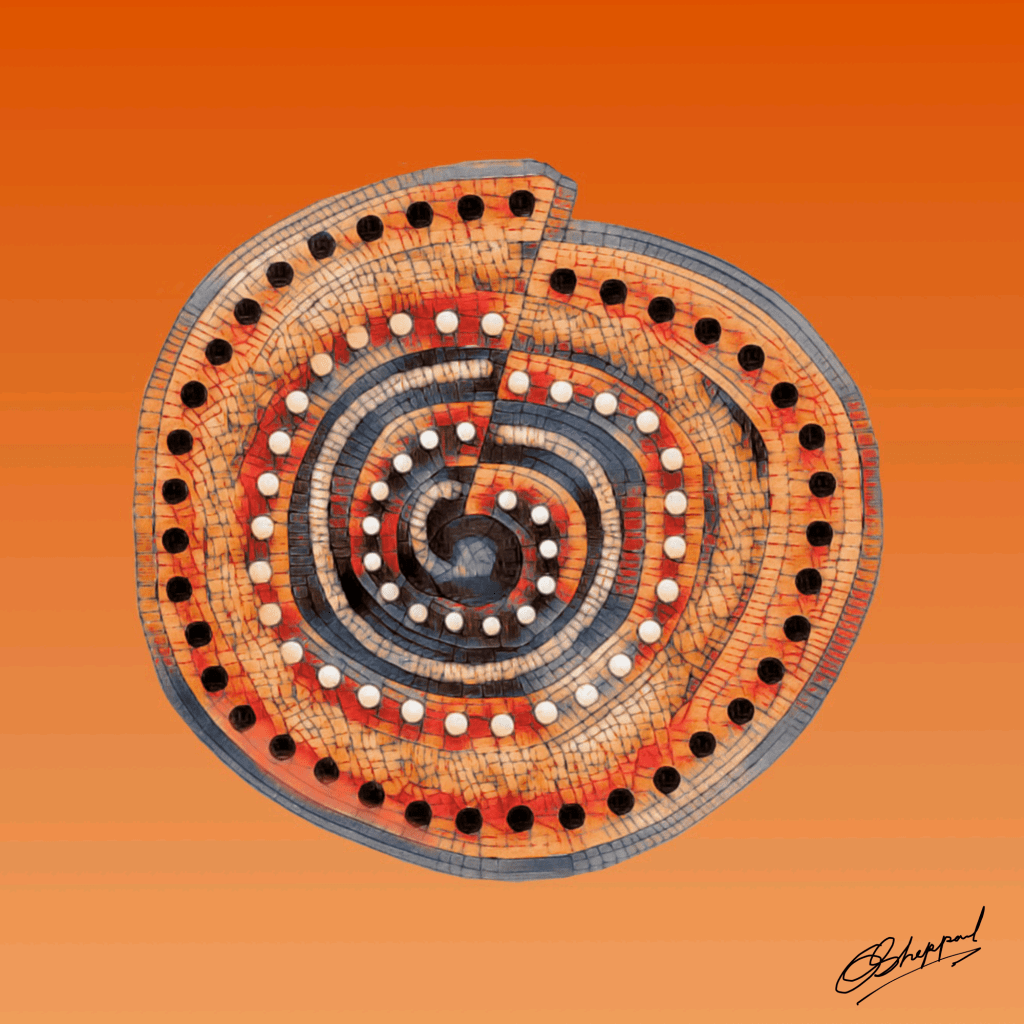

KAROLLINI CHRISTMAS
. . . ten new Australian carols . . .
NOW ON ITUNES, SPOTIFY, APPLE MUSIC & YOUTUBE (search Karollini Christmas to listen)
PREMIERE PERFORMANCES AT BLUE SKY COUNTRY CHRISTMAS St Patricks Cathedral Parramatta 7.30 pm December 8 2023
https://events.humanitix.com/blue-sky-country-christmas
TICKETS AT HUMANITIX.COM
River City Voices Choir, conducted by Dr. Sarah Penicka-Smith, will premiere Sheppard’s SATB carols Blue Sky Country, Mary Moorditj Ngaangk, Ngangk Yira Sunrise Carol and Not in a Golden Palace, together with sparkling new Australian Ngarra Burria Choral Festival music by Australian First Nations composers Deborah Cheetham, Christopher Sainsbury, Nicole Smede, Marlene Cummins, Tim Gray, and music by renowned composer Elena Kats-Chernin.
All cultures have popular carols and festival songs. They’re sung in many languages, and filled with the spirituality, sights and sounds of their homelands. Karollini Christmas is seasonally synchronised music for Australian festivals, concerts halls, churches and malls.
Listening to, performing, broadcasting and viewing licensed Australian First Nations music has a flow on effect – it affirms the presence and voices of Australian First Nations cultures in highly competitive world music markets. My Karollini Christmas music is a small part of this diverse, uniquely Australian musical repertoire, that the the Australian Ngarra Burria First Peoples Composers group supports and promotes.
Australia has a unique sonic cultural identity, that is most strongly present in Australian First Peoples musics and languages. This identity is closely integrated with the regional Australian Country-related music of many non-Indigenous Australian ally composers. Supporting the public presence of Australian First Peoples music, and Australian Country-centred music, by curating and coordinating mall playlists and streams of recognisably Australian online music, supports Australia’s social capital economy. When Australian listeners prioritise Australian music and media, our music dollars stay in Australia, and also strengthen Australian cultural presence on world stages.
Each time a registered, licensed Australian First Nations song is performed, streamed, downloaded or synchronised for film or a gaming app, royalty income flows to the song owner and their community. This income stream is not large, but it provides an important cultural safety net, and demonstrates cultural continuity and respect, by affirming the cultural and economic importance and active revival of Australian First Nations communities. Thousands of published audio tracks of Australian First Nations music are available online, and sales increases will increase the worldwide presence of Aboriginal Elder approved, licensed music. Published songbooks of Australian First Nations music are beginning to appear. Licenses to perform and record cover songs of Australian First Nations music, and other recognisably Australian music genres, are available from licensing agents APRA AMCOS and PPCA. Many Aboriginal and Torres Strait Islander communities, and the Australian Music Centre, Magabala Books, CAAMA, Gina Williams, Madjital Moorna, Austranesia, Score Exchange and ESM, record and publish albums and song scores of culturally and spiritually diverse Australian First Nations music. When Australian musicians only perform imported music, and Australians only listen to imported music, recognisably Australian voices are smothered, devalued and defunded.
The Torres Strait Islander Coming of the Light ceremonial songs are Australia’s best known set of Australian First Peoples’ carols. Gurrumul Yunipingu’s Gospel centred spiritual songs are also very well known. William G. James’ and John Wheeler’s enculturated Ten Australian Carols, released in 1948 and 1950, and Rev. Elizabeth Smith’s contemporary Australian seasonal hymns, that are all recognisably Australian, are often sung in Australian churches.
The 1999 Together in Song hymnbook (now out of print) included the Torres Strait Islander Easter hymn Joyful the Morning, sung to the tune Dikonomaytin, with English lyrics. In its Torres Strait homelands, Dikonomaytin is sung in the Tiwi Aboriginal language. After the Together in Song hymnbook went out of print in 2017, the Tiwi community published this song with its Tiwi lyrics, in Murli La. First Nations publishing and recording of Aboriginal songs has established and ensured proper protection of Indigenous Intellectual Property rights. However, with proper rights agreements, ethical allies and external cultural communities can also publish and record Australian First Peoples songs, as CAAMA and the ABC have done. If these songs have parallel English and First Nations language lyrics, they can then be sung by mixed groups, alternately or together, as Noongar musicians Della Rae Morrison and Kobi Morrison do with their Noongar / English Madjitil Moorna Choir songs in Booroo (Perth, Western Australia). Although establishing Aboriginal song ownership by making first editions is preferred for cultural revival, when Indigenous song rights have been established by prepublication and legal deposit of scores and recordings, ethical licensing of ally sponsored editions of popular, non-secret Aboriginal songs with parallel lyrics is an effective way to grow sound intercultural friendships and promote First Peoples’ musics.
When I composed, performed, recorded and published my Noongar Christmas carol Mary Moorditj Ngaangk (Mary Gentle Mother) in the Noongar language of South West Western Australia in 2007, very few Australian carols had been recorded or published in an Indigenous Australian language. The words and melody of this carol came to me through my mother’s Christian faith, through Noongar language help from Elders, and through prayer. This November this carol was selected for the Archbishop of Canterbury’s 2023 virtual Christmas Card.
Joyful the Morning (Dikonomaytin), a beautiful carol from the Torres Strait Islander Coming of the Light ceremony, was published in the Australian hymnbooks Together in Song and Gather Australia. These two hymnbooks are now out of print, but fortunately the Tiwi Strong Women’s choir has republished this song in Hymns and Traditional Songs in Tiwi, NT, a compilation edited by Michael John Sims.
Australian Aboriginal carols are also found in the notated music of the Ntaria Central Australian Women’s Choir (otherwise known as the Songkeepers), and in the well known Yorta Yorta freedom song Ngurra Burra Ferra, which was notated by Yorta Yorta Elder Dr. Lou Bennett’s great great grandfather Thomas Shadrach James, and translated into the Yorta Yorta language by Aunty Teresa Clements. Ngarra Burra Ferra was passed on the the Yorta Yorta by the Fisk Family Singers, an Afro-American group. The Fisk Singers had learned this ancient Hebrew freedom chant, known in English, Jewish and Arabic liturgies as The Song of Miriam and Moses, in church. They made their own version, then brought this to Australia. They became firm friends with the Yorta Yorta tribe, who made this song their own, and used it to sustain their Cummeragunga Walkoff Freedom Campaign. Freedom carols have ancient roots and moral authority, and they take on new life-giving forms with each successive generation.
To see Yorta Yorta Elder Dr. Lou Bennett and her granddaughter Lilly singing Ngurra Burra Ferra on Yorta Yorta Country, Shepparton, Victoria, Australia, at the Rambulara Football Club, cut and paste the following link into your briwser :
Carols that celebrate great local events have a way of spreading. Ngarra Burra Ferra has spread right across Australia. To hear another version of Ngarra Burra Ferra, sung by the Hummingsong Choirs on the steps of the Sydney Opera House, Australia, follow this link :
For many years, Ngurra Burra Ferra was sung covertly by Yorta Yorta people detained on Aboriginal reserves in Victoria. The severity of the 18th – 20th century colonial Aboriginal language bans was such that all Australian Aboriginal language songs sung to celebrate Aboriginal pregnancies, births, childhoods, initiations, marriages, crises, deaths and community revivals, were outlawed. Throughout the British Empire colonial era in Australia, Aboriginal speech and song was cruelly ridiculed and parodied as “lingo”, “yabber yabber” or “jabbin jabbin”, and Aboriginal language speakers were shamed and severely punished for speaking their own languages. These abuses can be stamped out by regular promotion of Aboriginal music, as a form of restorative justice.
One way to elevate local Australian Aboriginal languages to rightful prominence in Australia, and reverse unjust cultural censorship, is to publish Indigenous Australian language song lyrics in notated, officially approved and culturally licensed, locally performed religious music repertoires. This enables songs with Australian First Peoples’ lyrics, licensed by the remunerated song owners, to be taught to and performed by large immigrant congregations. Songs owned and taught by Australian First Peoples should have an honoured, properly remunerated place in Australian religious worship, especially on Feast Days. The right of inclusion of First Peoples music in enculturated Catholic liturgical worship was established at Vatican II, and many other faiths have made similar social justice regulations. Learning to sing a song in the language of the Country that hosts immigrant peoples, and performing this music, is a courteous way for immigrants and settler descendants who have been Welcomed into an Australian Country, to express their gratitude to their First Nations hosts. Depriving immigrants of the right to learn the music of their host country, deprives them of a way to acknowledge their hosts in an encultured, dynamic Indigenous language, and locks them perpetually into dislocated exile music cultures. When an Australian Indigenous song is notated, performed and professionally recorded within religious worship, or at a religious venue, deep cultural respect is demonstrated. It is crucially important to ensure high quality, professional notation, publishing, performances and recordings of all First Peoples’ songs, especially enculturated faith-related songs. This practice has ongoing benefits for Australian Aboriginal communities who own the songs, since royalties are paid to the community each time they are performed. So the more they are performed, the better.
Since I wrote Mary Gentle Mother, I’ve composed more Australian carols, some with Noongar lyrics or just a few Noongar words, and others in English. Writing lyrics, setting them to melodies, and composing harmonised scores was only the first step. I published the first editions of these carols gradually, on http://www.scoreexchange.com. Each of my carols recalls events, people and places familiar to me, . By the time the Covid pandemic arrived in 2020, I’d made home recordings of seven of my carols, and released them on Mary Moorditj Ngaangk and my first Karollini album, on iTunes and Spotify.
After composing seventeen choral pieces in response to the 2017 Uluru Statement from the Heart in 2020 – 2022, and attending The Song Company’s Sep-Oct 2022 tour of Songs from the Heart concert tour, I’d hoped to have a professional recording of my SATB / keyboard edition of my Australian carols ready for Christmas 2022, but spending time with my family and attending to health matters came first, so the release of Karollini #2 was delayed until Christmas 2023.
To record Karollini Christmas, in December 2022 I booked two Day Recording Sessions to record my ten SATB and keyboard carols at 2MBS’s Fine Music Founders Studio, St Leonards NSW. I hired two Day Sessions, four singers, a pianist, and an audio engineer, and directed the recording sessions, performed from my pre-published carol scores. 2MBS FM Audio Engineer Joe Goddard excelled himself over three intensive days of sustained rehearsal, vocal recording, mixing and mastering in close consultation with me, Dec 19 to 21 2022. Since each carol is a prayer, this was a spiritual experience for all participants, as well as a technical and compositional achievement. As a bonus, before one session I caught up with 2MBS FM classical music Presenter Stephen Wilson, a lifelong friend from my Adelaide youth, who introduced me to Schumann’s Dichterliebe as a teenager. The Karollini Christmas album tracks are Listen my Spirit, Ngangk Yira Sunrise Carol, The Kamay Carol, Blue Sky Country, Not in a Golden Palace, On This Day, The Coolamon Carol, Mary Moorditj Ngaangk / Mary Gentle Mother, Kaya Mary, and Golden Summer. I hope they’ll inspire others to compose more Australian carols, that reflect our summery, light-filled holiday season. The Master audios for the 2023 Karollini Christmas album were released to me by 2MBS FM Studio Manager Michael Guilfoyle on December 21 2022, and my Karollini Christmas album and Songbook was released on November 1 2023. On December 8 2023 River City Voices choir of the City of Parramatta launched this album by performing four of these carols at Patricks Cathedral Parramatta NSW Australia.

 elizabethsheppardmusic.com
Leave a comment